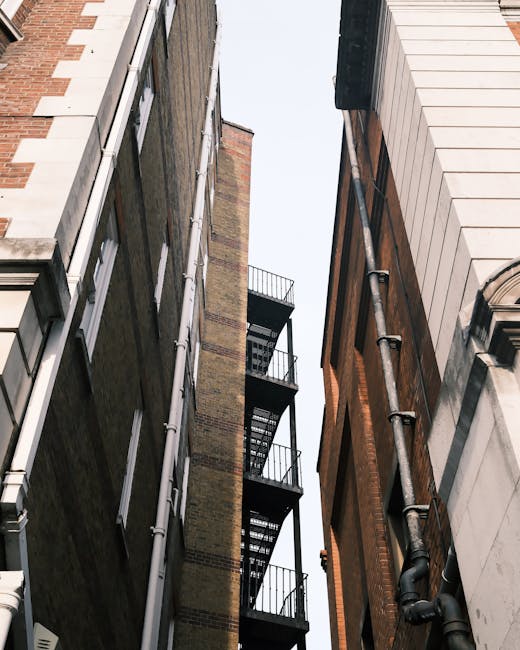
Narrow access cleaning for Hampstead flats: a practical guide for tight stairwells, awkward hallways, and compact homes
Living in a Hampstead flat often means charm, character, and location - but also narrow staircases, tight landings, low headroom, and the sort of access that makes even a simple clean feel like a bit of a puzzle. If you are trying to arrange Narrow access cleaning for Hampstead flats, you are probably wondering how a proper clean can happen without scratched walls, disturbed neighbours, or equipment that simply will not fit. Fair question.
This guide explains what narrow access cleaning actually involves, how it works in real homes, what to expect from the process, and how to avoid the common mistakes that cause delays or avoidable damage. It is written for residents, landlords, managing agents, and anyone who has looked at a basement stairwell and thought, well, that is going to be interesting.
Table of Contents
- Why narrow access cleaning matters
- How the process works
- Key benefits and practical advantages
- Who this is for and when it makes sense
- Step-by-step guidance
- Expert tips for better results
- Common mistakes to avoid
- Tools, resources and recommendations
- Law, compliance, standards, and best practice
- Options, methods, and comparison
- Case study or real-world example
- Practical checklist
- Conclusion
- Frequently asked questions
Why Narrow access cleaning for Hampstead flats Matters
Narrow access changes everything. In a standard house, you can often wheel in equipment, set up freely, and move from room to room without much fuss. In a Hampstead flat, the route in may be the hardest part of the job. Shared entrances, steep stairs, compact hallways, and delicate period features all create extra risk and extra planning.
That matters because cleaning is not just about the end result. It is also about how the result is achieved. A cleaner who turns up with bulky kit and no plan can easily waste time, annoy neighbours, or leave marks on skirting boards, paintwork, and bannisters. In a character property, that is the sort of thing people notice immediately.
Narrow access cleaning is especially relevant in Hampstead because many flats sit within older buildings where the layout was never designed around modern cleaning equipment. You may have narrow front steps, tight communal corridors, basement access, or awkward internal turns. Sometimes the issue is not the room itself. It is getting to the room without dragging hoses across carpets or blocking the hallway for half the morning.
There is also a wider practical reason: careful access planning often improves the quality of the clean. When a team arrives prepared, the process tends to be calmer, faster, and much less disruptive. Less bumping about. Less rework. Fewer little mistakes that become big ones later on.
Expert summary: narrow access cleaning is really about preparation, equipment choice, and respect for the building. In tight Hampstead flats, those three things matter more than brute force.
How Narrow access cleaning for Hampstead flats Works
The process usually starts before anyone steps through the door. A good clean in a tight flat begins with a quick assessment of access: where the team enters, how wide the staircase is, whether there are turns or landings, what the floor surfaces are, and where equipment can be safely set down. That simple check avoids a lot of trouble later.
For many homes, the aim is to use smaller, more manoeuvrable kit. Lightweight vacuums, compact tools, shorter hose runs, and careful product selection are often better than large machines that are overkill for the space. Truth be told, in a narrow hallway, a clumsy machine can be more of a liability than a help.
During the clean, the team will usually work in a logical sequence so the route stays clear. That may mean protecting the access path first, then cleaning the highest-priority rooms, and finally handling touchpoints like stairs, handles, and skirting. If the flat has a shared entrance, the cleaner should also be mindful of noise, timing, and keeping the passageway tidy.
In some cases, narrow access cleaning is paired with another service. For example, after decorating works, many clients book after builders cleaning because dust has a habit of creeping into the tiniest edges. In furnished homes, tasks may overlap with house cleaning, deep cleaning, or targeted treatments such as steam carpet cleaning when fabrics or floor coverings need special care.
The practical point is simple: the clean should fit the building, not the other way around.
Key Benefits and Practical Advantages
There are some obvious benefits to getting narrow access cleaning right, but also a few that people only notice afterwards. Once the job has been done properly, the building feels easier to live in. It sounds small, but it is not. A clean landing, a dust-free stair rail, or a fresh-smelling hallway can make a flat feel calmer and more cared for.
- Less disruption: better planning means fewer trips back and forth, less noise, and less blocking of shared areas.
- Reduced damage risk: carefully chosen equipment is less likely to scuff paintwork, chip corners, or catch on narrow stair rails.
- Better results in awkward spaces: compact tools reach areas that larger machines often miss.
- More neighbour-friendly: cleaner access routes and shorter working times help keep shared hallways pleasant for everyone.
- Suitable for older buildings: period flats often need a gentler, more considered approach.
There is another advantage that is easy to overlook: stress reduction. If you have ever tried to coordinate a flat clean while juggling work, keys, neighbours, and a staircase barely wider than a suitcase, you will know what I mean. A well-managed service saves mental bandwidth as much as it saves time.
For landlords and agents, the benefit is consistency. For residents, it is peace of mind. For owners of furnished flats, it is the confidence that the home is being treated with the same care you would expect for your own.
Who This Is For and When It Makes Sense
Narrow access cleaning is useful for a lot of Hampstead properties, but it is especially relevant in a few common situations.
- Tenants moving in or out: access can be tricky when furniture, boxes, and cleaning equipment all need to pass through the same tight route.
- Landlords and letting agents: quick turnarounds are easier when the clean is planned around the building, not forced into it.
- Owners of period flats: older layouts often include awkward turns, compact kitchens, and narrow stairs.
- Basement or top-floor flats: long stair runs make equipment handling more important.
- Airbnb and short-let hosts: turnaround timing matters, and guests notice access areas more than people expect.
This also makes sense if your building has shared spaces that need to stay presentable. A tidy entrance and well-managed access route often go hand in hand with communal area cleaning and scheduled regular cleaning. In smaller buildings, those services support each other rather neatly.
When does it not make sense? Usually when the property is open enough for standard cleaning with no access issues. If there are no narrow stairs, no shared corridors, and no practical challenge, then you may not need a specialist approach. Simple as that.
Step-by-Step Guidance
If you are arranging a clean in a flat with limited access, here is the most sensible way to think about it.
- Describe the access clearly. Mention stairs, lifts, narrow turns, low ceilings, or any communal entrance restrictions. If there is a tight corner at the top of the staircase, say so. Do not assume it is obvious.
- Identify the priority areas. Is the focus carpets, hard floors, kitchen surfaces, upholstery, or a full reset? The more focused the brief, the better the plan.
- Confirm the route in. Think about where equipment will be carried, where it can be parked, and whether there is space to unload safely.
- Protect the access path first. Stair runners, corner guards, and protective coverings can save a lot of bother.
- Choose the right cleaning method. For some flats, dry methods are better. For others, targeted hot water extraction or specialist spot treatment works well. It depends on the surface and the building.
- Clean from the most awkward area outward. That usually means tackling the difficult spaces early, while the route is still clear and the team is fresh.
- Finish with inspection. Check the stairs, doors, corners, and touchpoints before anyone packs away. It is amazing how often a small mark gets caught right at the end.
If the flat includes soft furnishings, you may also want linked treatments such as upholstery cleaning, sofa cleaning, or rug cleaning. In tight spaces, these are often easier to handle with a plan than as an afterthought.
One useful mindset: the best narrow access clean is usually the one that looks almost effortless from the outside. That does not mean it was easy. It means the planning was right.
Expert Tips for Better Results
A few practical habits make a big difference in flats with limited access.
- Measure the awkward bits, not just the rooms. Stair widths, turns, landing space, and door clearance often matter more than the square footage.
- Keep the route clear. Shoes, parcels, recycling bags, and spare furniture can become surprising trip hazards in a narrow hallway.
- Use the lightest suitable equipment. Bigger is not always better. In narrow access homes, nimble usually wins.
- Work in sections. Completing one area fully before moving on keeps disruption down and helps quality control.
- Watch moisture levels carefully. This matters for carpets, wood floors, and older materials that do not like being drenched.
- Communicate with neighbours if needed. A brief heads-up can smooth over noise, door access, or hallway use.
In our experience, the clean goes more smoothly when the client shares one extra detail that seems minor but really is not: where the tightest turn sits. That one thing can change the whole equipment choice. Little detail, big difference.
If you are dealing with marks, traffic lines, or stubborn stains in a flat with restricted access, services like stain removal and pet stain odour removal can be more efficient than a general pass. Not always, but often enough to be worth considering.
Common Mistakes to Avoid
Most access-related problems are preventable. The trouble is, people often notice them only once the cleaner is already at the door.
- Under-describing the building. "A few stairs" can mean very different things in practice.
- Booking the wrong type of clean. A light refresh and a proper deep clean are not the same job.
- Leaving access clutter in place. If the hallway is full of bags, prams, or deliveries, the job becomes slower and less safe.
- Assuming every machine will fit. It sounds obvious, yet it still happens.
- Ignoring shared-space etiquette. In a narrow block, courtesy matters. A lot.
- Forgetting delicate surfaces. Painted woodwork, old glass, and tired carpet edges need a gentler touch.
A common one, and it is a bit funny in hindsight, is expecting a normal-sized setup to magically behave like a compact kit. It will not. It simply will not.
Another mistake is failing to match the cleaning method to the floor type. If the property has hard flooring in the entrance and carpeted bedrooms, it often makes sense to combine hard floor cleaning with carpet care rather than treating every surface the same way.
Tools, Resources and Recommendations
For narrow access flats, the most useful tools are usually the least dramatic ones. Compact vacuums, smaller mop systems, soft brushes, detail cloths, edge tools, and protective coverings all earn their keep. You do not need a truckload of kit. You need the right kit.
A few practical recommendations:
- Use protective padding for corners and bannisters when carrying equipment through tight spaces.
- Choose low-residue products where possible, especially in homes where drying time is limited.
- Keep microfibre cloths and detail tools on hand for rails, switches, frames, and skirting.
- Prioritise compact extraction and spot treatment for fabrics and carpets where access is tight.
- Plan for disposal and recycling sensibly if the job produces packaging, dust bags, or removed clutter.
For some homes, a broader tidy-up is needed first. If the flat has accumulated a lot of unwanted items, house clearance may be a useful preliminary step before cleaning begins. That is not always necessary, but in cramped properties, clearing the path can make everything calmer and faster.
And if you are preparing a flat for guests, moving day, or a new tenancy, services such as move-in cleaning, move-out cleaning, end of tenancy cleaning, or one-off cleaning can be the most efficient route. Different names, yes, but the access planning still needs to be sharp.
Law, Compliance, Standards, and Best Practice
Cleaners working in narrow-access homes should always follow sensible health and safety practice, particularly around manual handling, slip risk, trip hazards, and the safe use of products. In the UK, that usually means working with a proper risk-aware approach rather than improvising on the stairs because "it will probably be fine". Sometimes it is fine. Sometimes it is not. Best not to guess.
For Hampstead flats, the practical best practice is straightforward:
- keep routes clear and as dry as possible;
- avoid overloading staircases with equipment or supplies;
- use suitable PPE where needed;
- store and transport cleaning products safely;
- respect building rules for shared entrances and common parts;
- reduce noise and disruption where reasonably possible.
If a property has landlords, managing agents, or block rules, those should be followed too. Shared buildings often have simple expectations around access, hallway use, and keeping communal spaces clean. That is not bureaucracy for its own sake; it is how everyone avoids friction.
It is also wise to choose a company that can explain its procedures clearly. You may want to review pages such as health and safety policy, insurance and safety, terms and conditions, and pricing and quotes before booking. That kind of transparency matters, especially when access is tricky and you want to know exactly how the job will be handled.
Options, Methods, and Comparison
Not every narrow-access job should be handled the same way. The right approach depends on the surface, the building layout, and how much disturbance you can tolerate.
| Method | Best for | Strengths | Limitations |
|---|---|---|---|
| Compact general cleaning | Light refreshes, regular upkeep | Quick, flexible, easy in tight hallways | May not remove deep soil or set-in stains |
| Deep cleaning | Heavily used flats, move-ins, move-outs | More thorough, better for neglected areas | Takes longer and needs more planning |
| Steam carpet cleaning | Carpets needing a deeper fibre clean | Strong on dirt and freshness when suitable | Drying time and access route need attention |
| Spot and stain treatment | Isolated marks, spills, pet issues | Targeted, efficient, less invasive | Not ideal for widespread dirt |
| Combined flat clean | Multiple surfaces in one visit | Good for whole-home reset | Needs tighter sequencing in narrow spaces |
If you are unsure which route to choose, think about the condition of the flat rather than the label. A tidy but dusty home may only need a light intervention. A flat after a tenancy change or renovation may benefit from a stronger, more methodical clean. The building itself usually decides the rest.
Case Study or Real-World Example
Here is a typical Hampstead scenario. A first-floor flat in a converted Victorian building has a narrow front stairwell, a tight turn halfway up, and a shared landing that is just wide enough for one person and a shopping bag. The residents want the place cleaned before new furniture arrives the next day. Time is tight, naturally.
The cleaning plan starts with a quick review of access and a decision to keep equipment minimal. The route in is protected, then the most awkward rooms are handled first while the corridor is still clear. Carpets in the hallway receive careful treatment, the kitchen is cleaned with compact tools, and soft furnishings are addressed without dragging oversized kit through the stairwell. No drama, no theatre, just steady work.
The useful part of this example is not that the cleaning was complicated. It is that the complications were anticipated. That is what made the difference. The flat ended up ready on time, the access route stayed tidy, and the residents did not spend the afternoon apologising to neighbours. Which, let's face it, is a nice outcome.
In buildings like this, a service line that includes domestic cleaning, window cleaning, or oven cleaning can be helpful where the whole flat needs attention, not just one surface. The exact mix depends on how the property is used and how much access there really is.
Practical Checklist
Before booking or starting a narrow access clean, run through this checklist. It keeps things simple.
- Confirm how many stairs or landings there are.
- Note any tight turns, low ceilings, or narrow door frames.
- Clear bags, shoes, and clutter from the access route.
- Identify shared areas that need extra care.
- Say whether pets, children, or vulnerable occupants are present.
- Explain which surfaces need the most attention.
- Share any stain, odour, or damage concerns early.
- Check whether furniture needs moving.
- Ask how the team protects walls, corners, and floors.
- Make sure timings fit building rules and neighbour expectations.
- Confirm what happens if access turns out to be tighter than expected.
- Review the service provider's policies and booking information.
Quick takeaway: the cleaner who gets the access details right before arrival usually delivers the smoothest result. That is the whole game, really.
If you are comparing options, it can also help to read more about about us and the company's wider approach to service delivery. A good narrow-access clean is as much about attitude as it is about equipment.
Get a free quote today and see how much you can save.
Conclusion
Narrow access cleaning for Hampstead flats is about more than squeezing equipment through a tight doorway. It is careful planning, the right tools, respectful working, and a cleaning method that fits a real building rather than an ideal one. In older London flats, those details matter a great deal.
If you are living with a steep stairwell, a shared entrance, or a compact layout that makes cleaning feel awkward, the good news is that it is manageable. With the right preparation, even a tricky property can be cleaned efficiently without turning the hallway into a battleground. And honestly, that is what people want most: a clean flat, minimal fuss, and no awkwardness with the neighbours.
Take it one step at a time, ask clear questions, and choose the approach that suits the building. Done well, the result feels calm, fresh, and properly looked after - which is exactly how a Hampstead flat should feel.
Frequently Asked Questions
What does narrow access cleaning mean in a Hampstead flat?
It means cleaning a flat where the route in, the hallway, the stairs, or the internal layout is tight enough to affect the cleaning method. The job needs more planning than a standard open-access property.
Why is narrow access more common in Hampstead properties?
Many Hampstead homes are older conversions, period buildings, or compact flats with stairwells and hallways that were not built for large modern equipment. That is very normal here.
Can a deep clean still be done in a narrow access flat?
Yes. It just needs the right setup, the right equipment, and a realistic plan for how the team will move through the building. Some deep cleans are actually easier when they are broken into sections.
How do cleaners protect walls and bannisters in tight spaces?
They may use protective coverings, careful carrying techniques, smaller tools, and slower movement through the access route. In narrow staircases, that extra caution really pays off.
Is narrow access cleaning suitable for move-out cleaning?
Very often, yes. Move-outs are a common time to book this type of service because the home may need a full reset and the access route may already be busy with boxes or furniture.
What should I tell the cleaner before they arrive?
Tell them about stair width, tight turns, shared entrances, parking, lifts, pets, fragile surfaces, and any clutter in the route. The more honest and specific you are, the smoother the clean usually goes.
Does narrow access cleaning take longer than standard cleaning?
Often it does, because equipment movement and setup are more careful and sometimes slower. The actual time depends on the layout, the condition of the property, and the services included.
Can carpet cleaning be done in a flat with narrow stairs?
Usually yes, provided the equipment can be brought in safely and the stairwell is protected. Some flats work better with compact or targeted methods rather than very large machines.
What if my flat has a shared corridor or communal entrance?
Then the cleaner should treat that space carefully and work in a way that does not block other residents. Shared access needs good timing and good manners, plain and simple.
How do I know which cleaning service I need?
If the flat needs a general refresh, a regular or domestic clean may be enough. If it is heavily used, recently vacated, or affected by building work, a deeper or more specialised service may be more suitable.
Is narrow access cleaning more expensive?
It can be, depending on the time, equipment, and level of care involved. The fairest way to think about it is that the access challenge may change the job size, so a clear quote is important.
What is the best way to prepare the flat before cleaning?
Clear the access route, secure pets, move light clutter, and point out anything awkward in advance. A few minutes of preparation can save a lot of back-and-forth later.
Where can I check a company's policies before booking?
Look at pages such as health and safety policy, insurance and safety, pricing and quotes, and terms and conditions. That helps you understand how the service is run before anyone steps through the door.
Who benefits most from this type of cleaning?
Tenants, landlords, agents, Airbnb hosts, and owners of period flats all benefit, especially when access is tight and time matters. It is the kind of service that quietly solves a lot of practical headaches.
If you are dealing with a tricky staircase, a compact flat, or a building that needs a gentler touch, you are not being fussy - you are being realistic. And that usually leads to a better result.